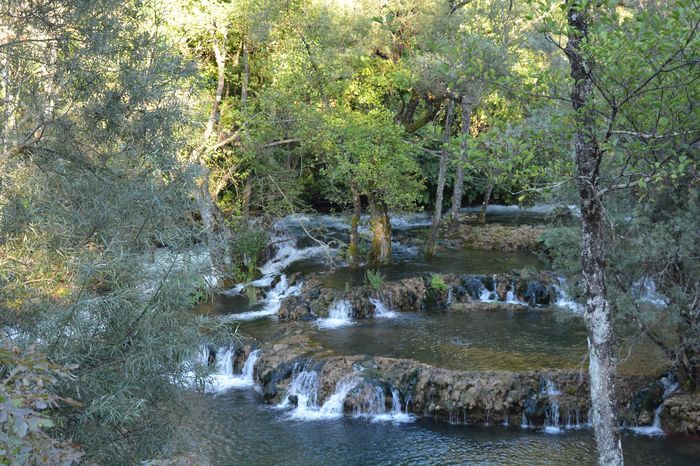
Western Anatolia is shaped by several important rivers that flow from the interior toward the Aegean Sea. These rivers are dry for most of the summer but carry strong flows in winter and spring. The most significant rivers are the Caicus (Bakırçay), Hermus (Gediz), Cayster (Küçük Menderes), and Meander (Büyük Menderes).
The Meander River is especially famous for its winding course, and its name later became a word used to describe any river or path that twists and turns. In ancient times, the valleys created by these rivers formed the only reliable routes between the western coast and inland Anatolia. Roads naturally followed the river paths, making them essential for trade, travel, and communication The Lydians and Their Influence.
Fertile Land and Agricultural Wealth
The soil of western Anatolia is rich and fertile. Even today, the region produces a large portion of Turkey’s cotton and tobacco. In ancient times, agriculture was equally important. The gentle slopes of the low mountains are covered with vineyards and orchards, producing figs, pomegranates, grapes, and many other fruits.
Two products have been especially important since antiquity: olive oil and wine. Olive trees grow well in the Mediterranean climate, and wine production became a key economic activity for many ancient cities. These agricultural goods were not only consumed locally but also traded across the Aegean and beyond.
Coastline, Harbors, and Early Settlements
The coastline of western Anatolia is highly irregular, with many deep and narrow inlets protected from the strong Aegean winds. These natural harbors made it easy to build ports where ships could safely anchor. Because of this advantage, the region became a center of maritime trade.
Archaeological excavations show that the western coast of Anatolia was densely populated during the Late Bronze Age (about 1500–1200 BCE). Important settlements such as Troy (Troia) and ancient Smyrna (modern Bayraklı) show continuous occupation beginning in the third millennium BCE and continuing into historical times. These cities grew because of their strategic locations and access to both land and sea routes Sightseeing Tours Turkey.
Collapse and the Dark Ages
Around the 1190s BCE, this peaceful and prosperous region experienced a dramatic change. Large-scale upheavals, later blamed on mysterious groups known as the Sea Peoples, spread across the Aegean world. These movements affected Anatolia, Cyprus, Syria, and even reached Egypt. Egyptian records describe these invaders as unstoppable.
This period is often linked to the fall of the Mycenaean kingdoms in Greece and the collapse of the Hittite Empire in Anatolia. By the ninth and eighth centuries BCE, the old social and political structures had disappeared. Large cities were destroyed or abandoned, and small villages or fortified settlements took their place. Because very little evidence has survived from this time, historians often refer to these centuries as the Dark Ages.
Greek Colonization of the Aegean Coast
Greek settlement along the Aegean coast of Anatolia likely began as early as the eleventh century BCE and continued, with pauses, until the seventh century BCE. Different Greek groups settled in different areas. The Aeolians moved into the region north of Smyrna, the Ionians settled the central coast, and the Dorians occupied Caria as well as the islands of Rhodes and Cos.
These settlers chose sites near river mouths and protected bays. On rocky hills overlooking fertile land, they built farming communities surrounded by sun-dried brick walls set on stone foundations. These early settlements formed the basis of the powerful cities that would later shape the history of western Anatolia.